From Club Matches to NCAA: How to Build a Tennis Track Record That Gets You Noticed
A walkthrough of how a real tennis track record is built — profile, match history, technique breakdown, and progress tracking — and why starting early changes the recruiting process entirely.
From Club Matches to NCAA: How to Build a Tennis Track Record That Gets You Noticed
Somewhere between a Saturday club match and a signed letter of intent, there's a gap most junior players never close — not because they lack the talent, but because nobody was keeping the record. Every serve drilled, every match scored, every rating point earned along the way disappears into memory instead of becoming something a coach can actually see.
Here's what that record looks like when it's actually built — and how a player goes from "played some tournaments" to a profile a college coach can evaluate in five minutes.
It Starts With a Profile, Not a Highlight Reel
Most families think the recruiting profile is the last step — something you throw together once a coach shows interest. In reality, it should be the first thing built, because it's the container everything else feeds into.
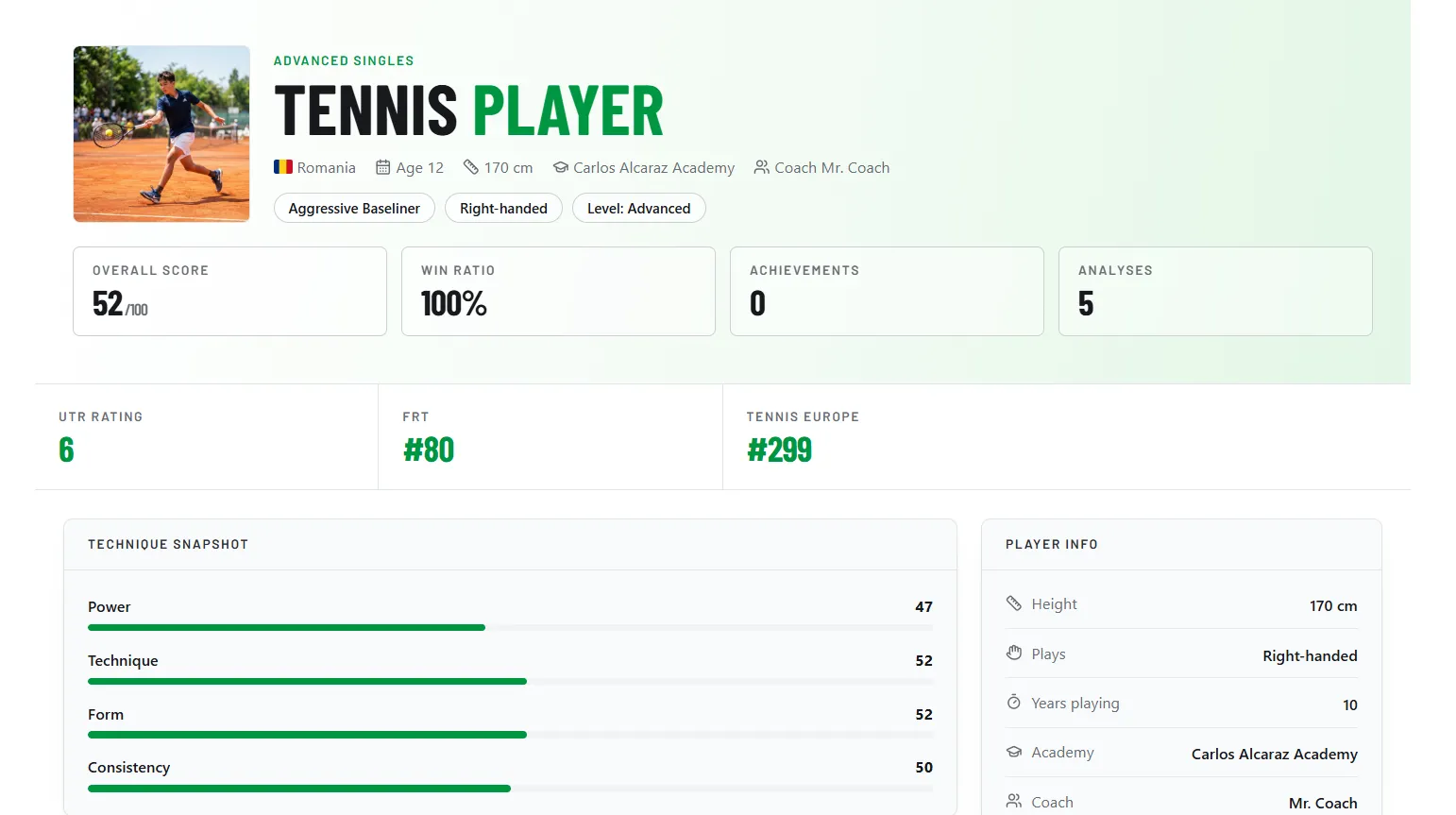
A real player profile pulls together the basics a coach checks immediately: overall score, win rate, matches played, current ranking, and — critically — a technique breakdown across the fundamentals that actually predict performance: power, technique, form, and consistency, each scored individually rather than buried in a general "good player" impression. Add verified achievements and a short bio, and a coach has, in one screen, what used to take three phone calls and an email chain to piece together.
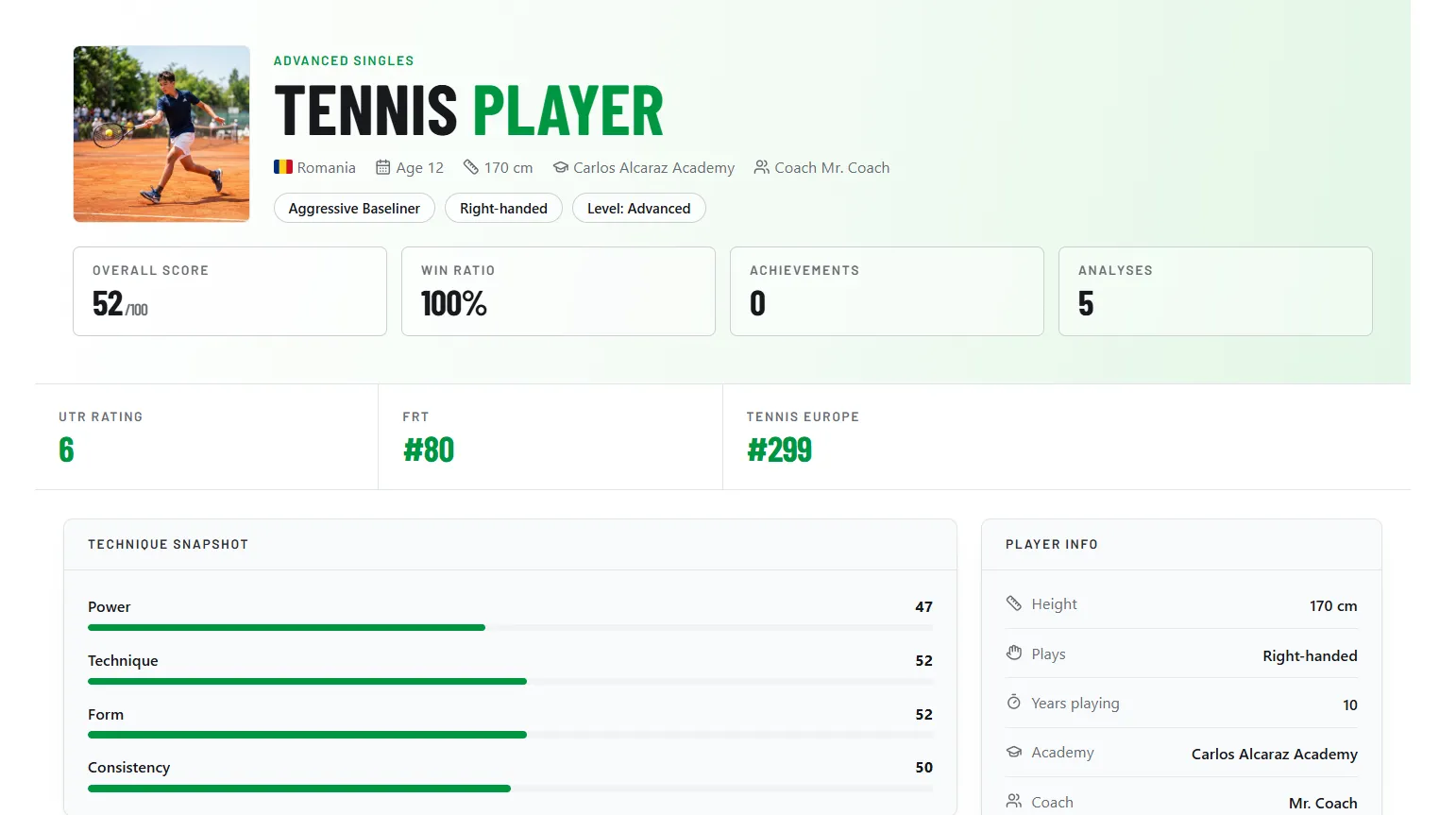
This is exactly the kind of profile we covered in more depth in What College Tennis Coaches Actually Look For in a Recruitment Profile — the difference between a player who's easy to evaluate and one a coach has to dig for information on.
Then It's Filled In, Match by Match
A profile with no data behind it is just a form. What makes it credible is the match history sitting underneath — scores, opponent names, and stats logged consistently over months, not reconstructed from memory the week a coach asks for it.
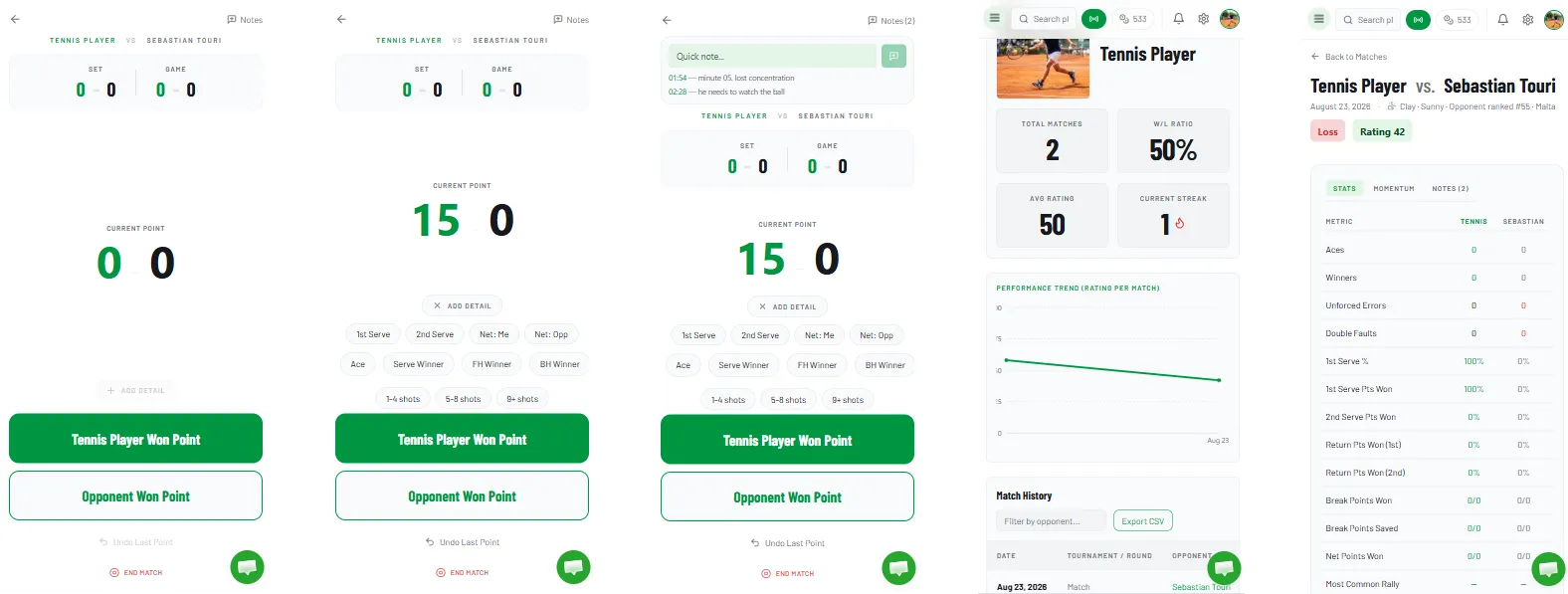
This is the part most families get wrong, and it's exactly what we walked through in How to Track Your Junior Tennis Player's Progress — the habit of logging results consistently is what turns a scattered memory of "we've played a lot of matches" into an actual trend line a coach can trust.
Technique Gets Broken Down, Not Just Described
"He has a good backhand" means very little to a coach evaluating dozens of recruits. A technique breakdown that scores specific fundamentals — power, footwork, form, consistency — on an actual scale, with a written note on what to work on next, means something completely different.
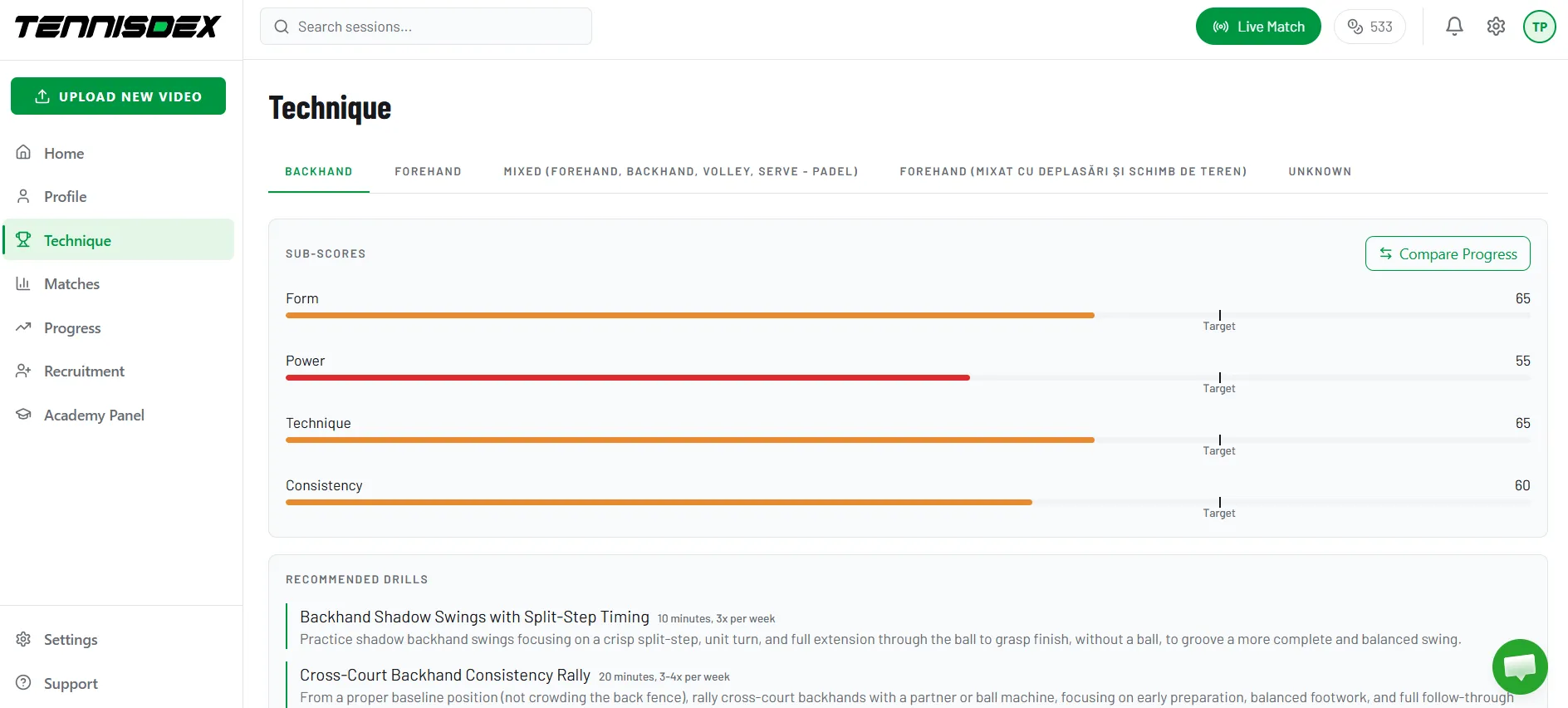
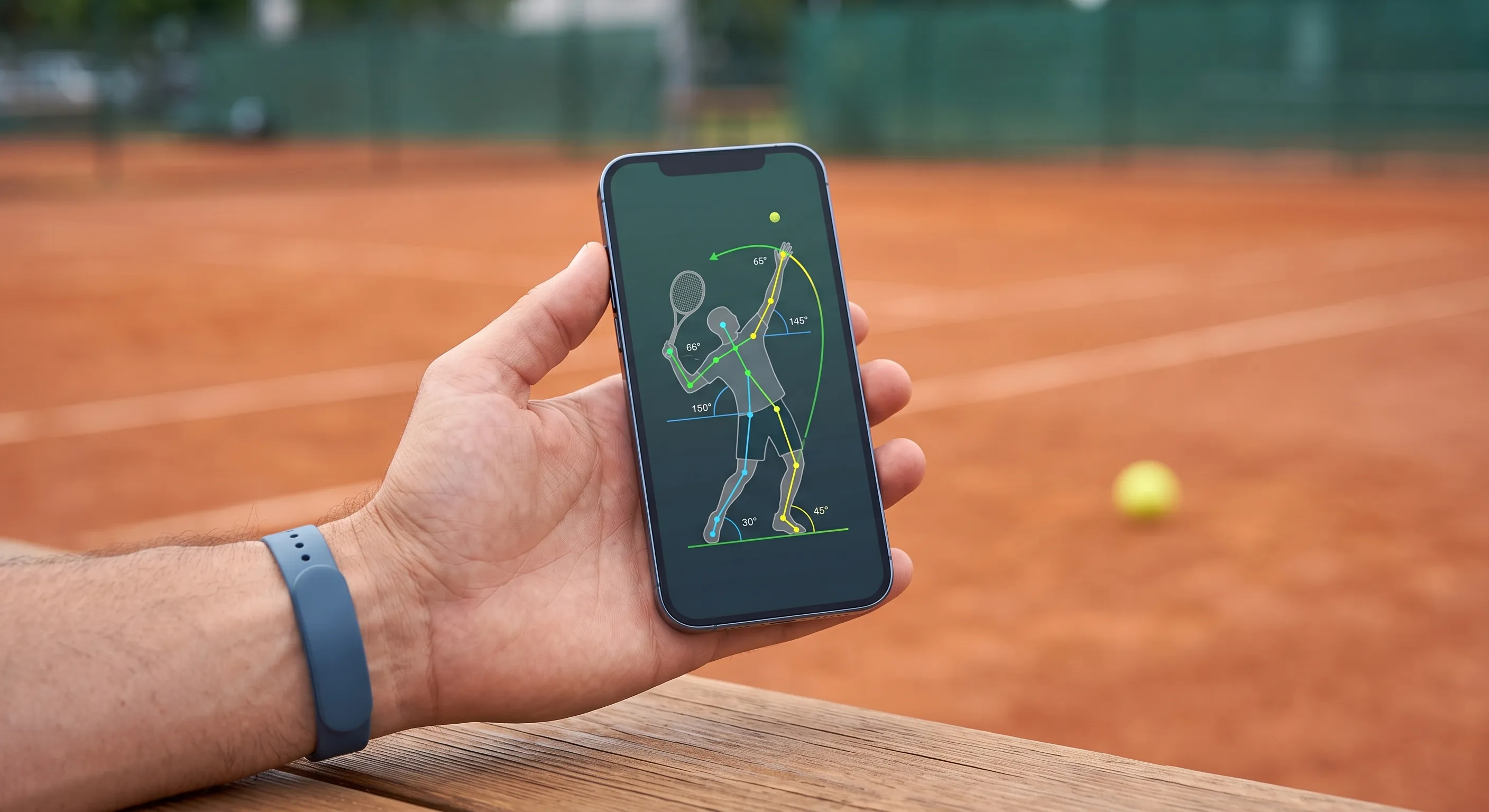
This is where AI-assisted video analysis earns its place. Instead of a parent guessing whether a serve toss looks different than it did last month, a specific, written recommendation — something like tightening backhand footwork on split-step timing, or working cross-court backhand consistency in rallies — gives both the player and the coach something concrete to act on. We covered the broader landscape of tools that attempt this in Best Free Apps to Analyze Your Tennis Serve Technique.
Progress Gets Compared, Not Just Logged
Raw data sitting in a table doesn't tell a story on its own. What actually shows a coach — or a parent, or the player — that something real is happening is a trend: where a skill started, where it is now, and how much it moved.
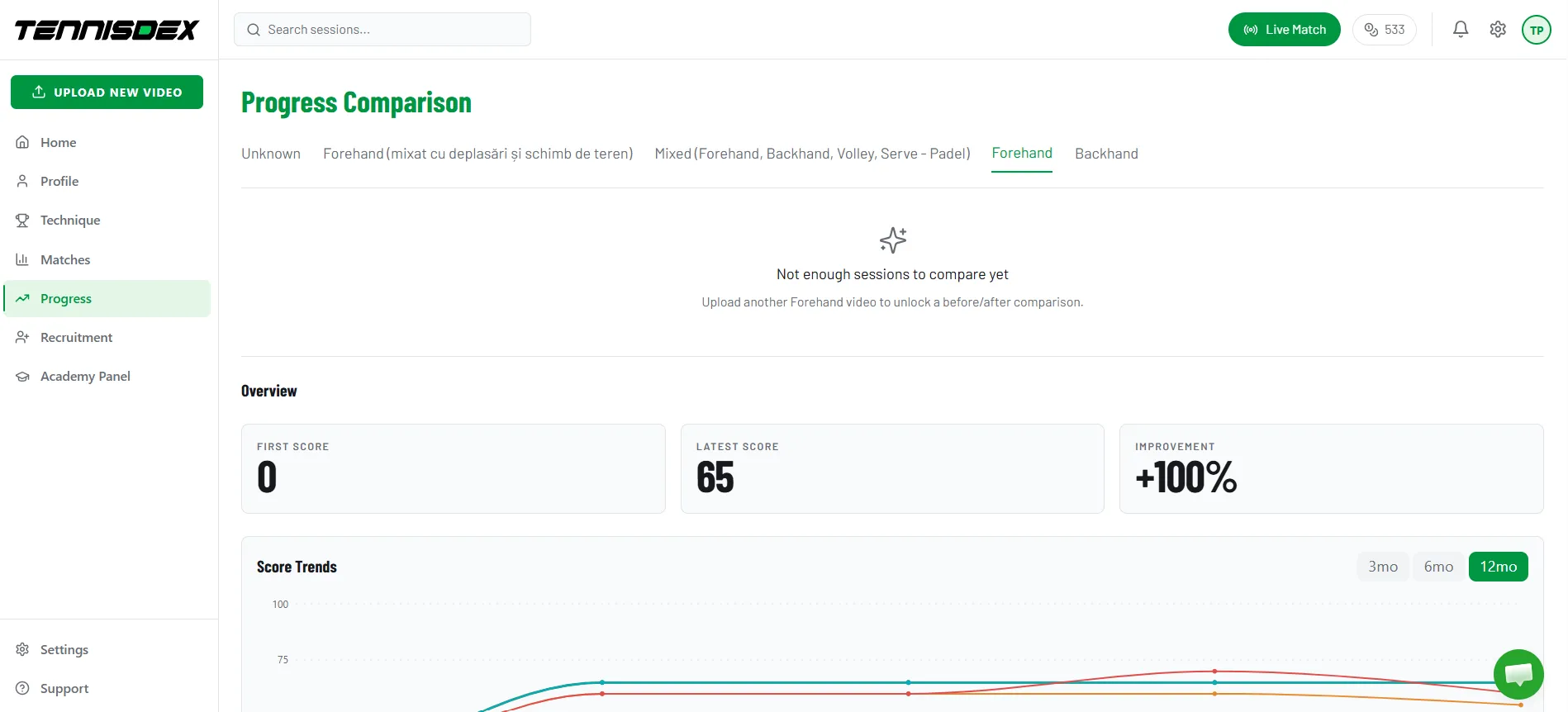
A jump from a 0 starting score to 65 over a tracked period, with a documented +100% improvement, tells a far more convincing story than "he's gotten a lot better this year." It's also exactly the kind of evidence discussed earlier around UTR trends — coaches don't just want a number, they want to see the direction it's moving and how it got there.
It All Lives on One Dashboard
None of this works if it's scattered across five different apps and a parent's phone gallery. The dashboard is where the profile, match history, technique scores, and progress trends come together into a single view — the score trend line, recent matches, and technique breakdown all visible at once, updated automatically as new matches and videos are added.
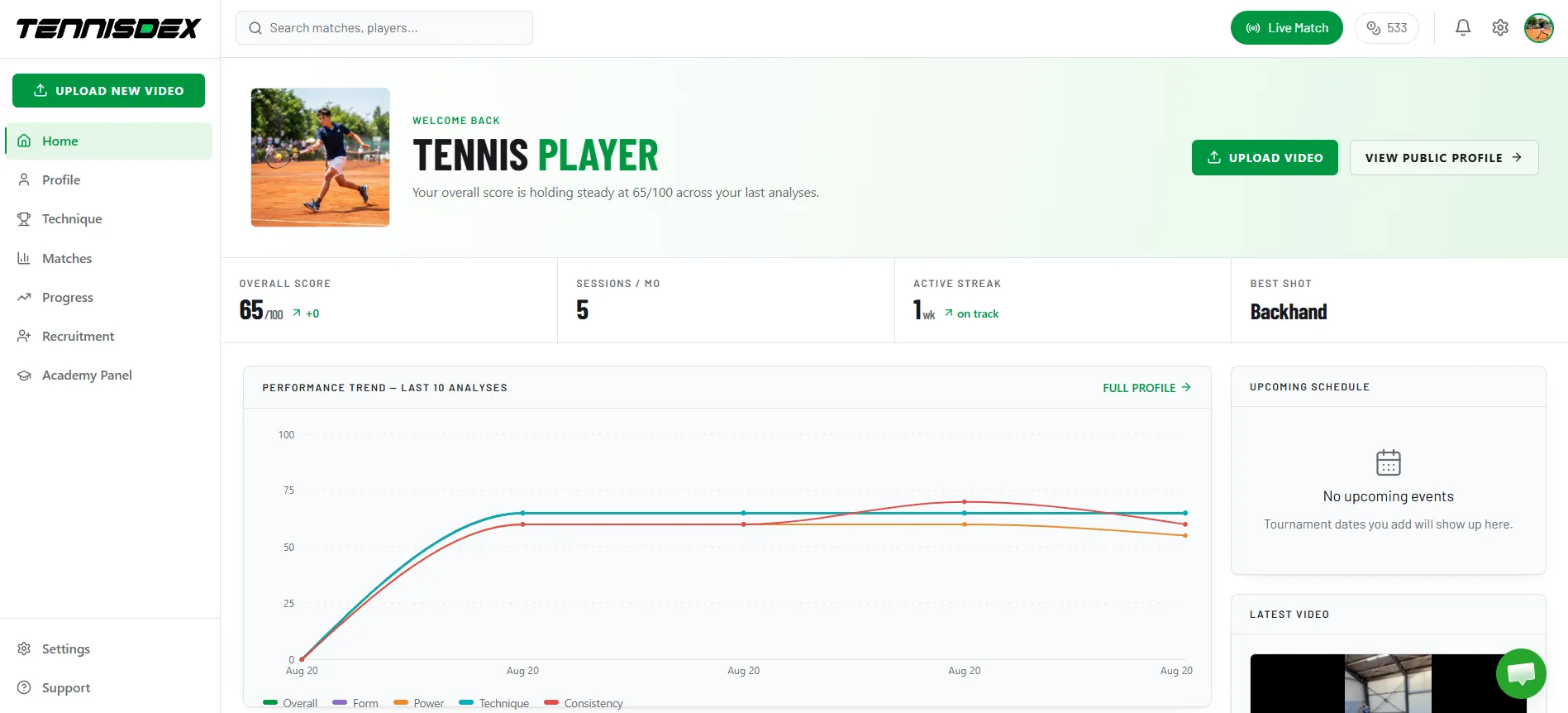
This is the shift that matters most: instead of a player's development living in fragments — a spreadsheet here, a video folder there, a coach's verbal notes somewhere else — it lives in one place that's always current and always ready to share.
The Real Payoff: A Record That's Already Built When It's Needed
The families who navigate recruiting most smoothly aren't scrambling to assemble two years of match history the month before reaching out to coaches. Their record already exists — built one match, one practice video, one tracked skill at a time, going back years rather than weeks.
That's the actual value of building this habit early, whether a player is 12 and years away from any recruiting conversation, or 16 and about to start one. The tools exist now to make that record build itself in the background, instead of depending on someone remembering to write it all down.
Start building your track record today — free.
Profile, match history, technique breakdown, and progress tracking — all in one dashboard that's ready to share whenever you need it.
Start Tracking Free